

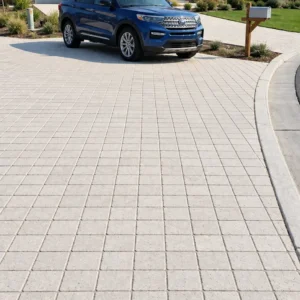
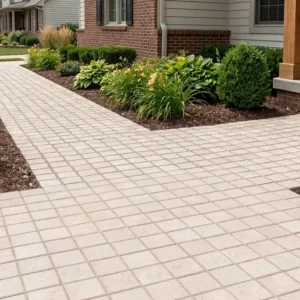
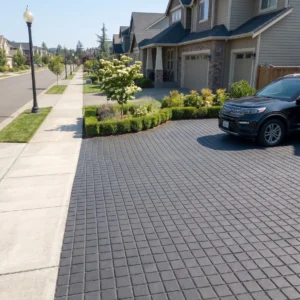
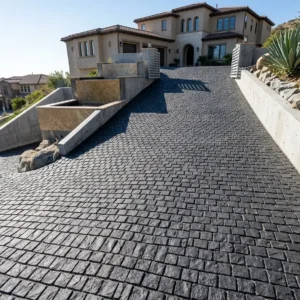


More often than not, when a cobbled surface fails early the stone is still perfectly sound — what moved is the bedding course beneath it. Basalt Cobbles are dense, fine-grained volcanic stone that will outlive most of what sits under them, so the real specification work happens in the layers nobody sees once the field is swept in. What follows is the sequence that keeps a cobble field tight through its first wet seasons: reading the subgrade, choosing a format, setting joint widths, and getting several tons of stone onto a site undamaged.
What Sets Basalt Cobbles Apart as a Paving Stone
Basalt begins as lava that cooled quickly enough to lock its crystals small and tight. That fine, even grain is the practical difference on site: no bedding planes to delaminate, no soft seams running through a unit, which is why split faces on basalt cobblestone chip cleanly rather than flake. The federal geological description of basalt explains the rapid-cooling origin behind that structure.
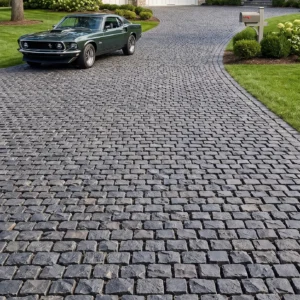
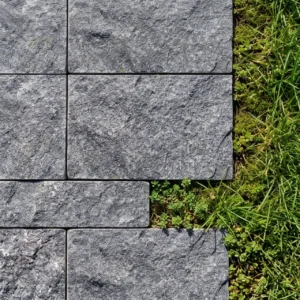
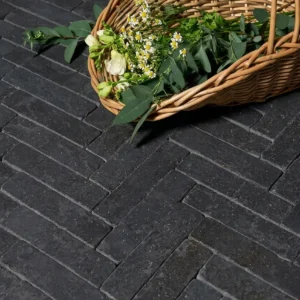
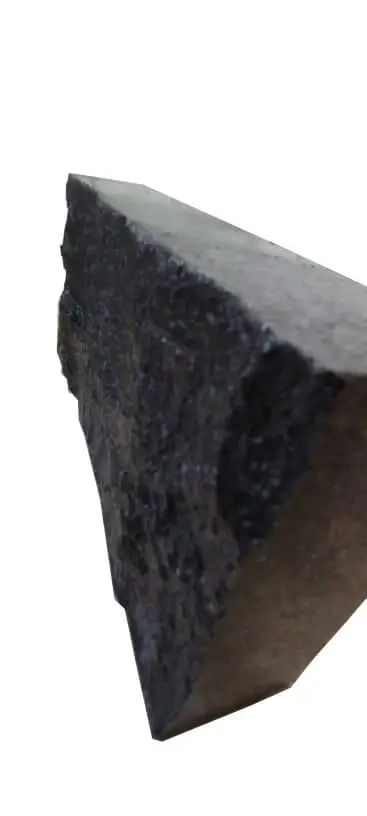
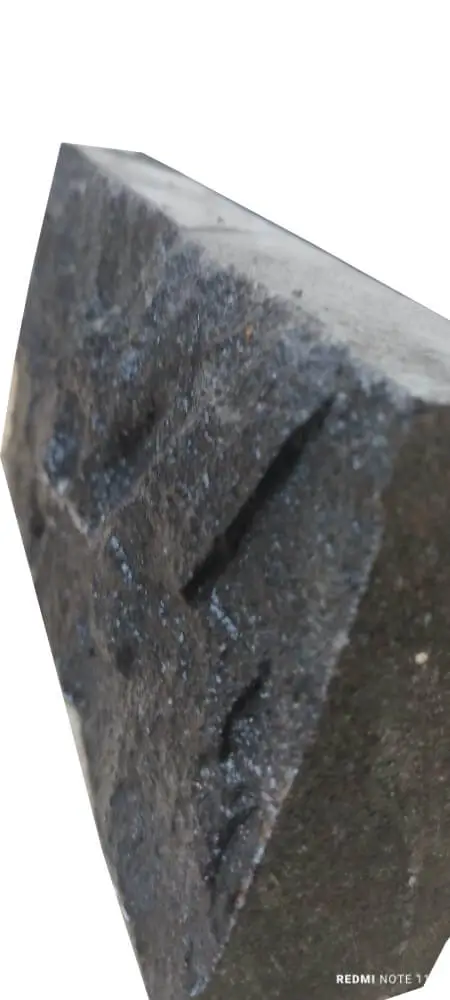
Color sits in the charcoal-to-graphite family, with some lots running a cooler blue-grey and others closer to near-black once wet. Natural variation is part of the material, not a defect; blend from several crates as you lay rather than working crate by crate.
- Dense igneous grain with no visible layering, which keeps arrises sharp under wheel traffic
- Shade variation within a lot — blending across crates prevents patchy banding in the finished field
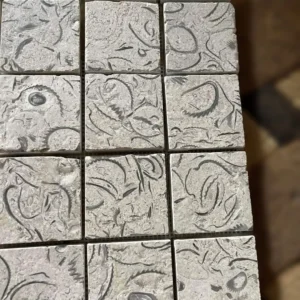
- Vesicular (slightly pitted) surfaces appear in some basalts and hold joint material well
- Dark tone hides tire marks and organic staining better than pale limestone or sandstone
You can request a sample set of Basalt Cobbles from Citadel Stone before committing, which is worth doing if the stone has to sit alongside existing paving. Judge samples outdoors, wet and dry, never under showroom lighting.
Reading the Subgrade Before You Order
The ground under a field of Basalt Cobbles decides the build-up, and you should know what you have before anyone prices aggregate. Dig test holes at the low point and at the entrance, not just in the middle where the ground is usually best. A proof-roll with a loaded truck or a plate compactor shows the soft spots more honestly than a soil map will.
Clay, Silt and Expansive Ground
Clay soils hold water and move seasonally, and that movement travels straight up through a thin base into the joints. Your answer is separation and depth: a woven geotextile over the formation to stop fines pumping into the aggregate, then a thicker base than you would use on gravel. Silty soils behave worse in some ways — they lose strength the moment they get wet, so protect the formation from rain once it is open.
Sands, Gravels and Made Ground
Free-draining sands and gravels are forgiving, but engineered fill and old made ground are not. Fill that was never compacted in controlled lifts will settle unevenly for years, and no amount of good bedding sand hides that. Where you find it, excavate to competent material or specify a stabilized base.
- Proof-roll the formation and dig out any area that pumps or deflects
- Use a separation geotextile over fine-grained soils, lapped generously at the seams
- Increase base depth for vehicular areas and for soils that swell and shrink seasonally
- Fall the formation toward your outlet before you place a single load of aggregate
Base, Bedding and Edge Restraint That Hold the Field
Compact the base in lifts, not in one hopeful pass — each lift should be thin enough that the plate actually reaches the bottom of it. The bedding course is where most installers over-think and over-deepen; a thick bedding layer is a cushion that lets individual units rock under load. Keep it consistent, screed it true, and correct the base rather than topping up low spots with extra sand.
Edge restraint is non-negotiable. A field of Basalt Cobbles is only as tight as its perimeter, and once the outside course can migrate, every joint inboard of it opens in sequence. Haunched concrete edging, a mortared soldier course, or a steel restraint all work; nothing at all does not.
- Screed the bedding layer to a uniform depth and do not disturb it before laying
- Restrain every free edge, including around drains, trees and transitions to lawn
- Fill joints fully and in stages, vibrating and re-filling rather than brushing once
- Plan to top up joint material after the first heavy rain — settlement here is normal
Sizes, Thickness and Format Choices
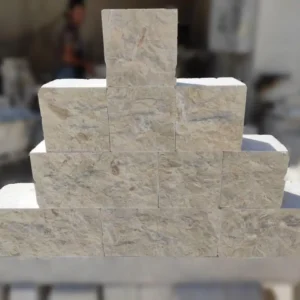
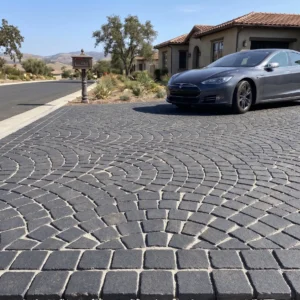
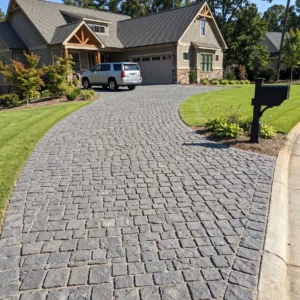
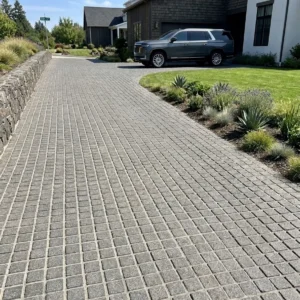
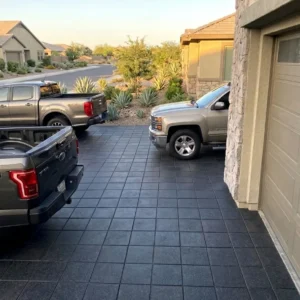
Basalt Cobbles come in a few practical families: small cubes for tight radii and fan patterns, rectangular setts for running bond and herringbone, and larger basalt blocks where you want fewer joints and a calmer surface. Thickness follows load, not looks — pedestrian courtyards tolerate a thinner unit, while a driveway or a service route wants real depth under the wheel path. Ask which nominal thickness your drawings call for before you price, because the difference in tonnage is substantial.
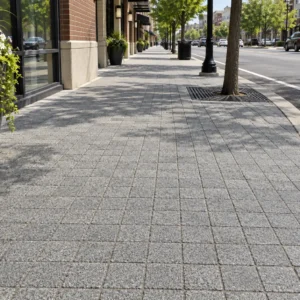
Basalt paving stones also mix well with other formats on the same site. A cobble apron at the entrance with larger-format slabs beyond is a common and durable arrangement, and if you are considering that transition, smooth basalt paving blocks cover the detailing that applies where two unit sizes meet. Keeping both elements in the same stone family avoids the color mismatch that shows up a year later.
Citadel Stone cuts Basalt Cobbles to order at our selected quarries, so a non-standard size or a specific sett proportion is a conversation rather than a dead end. For custom work, ask about lead times early in the design phase.
Finish, Texture and Surface Character
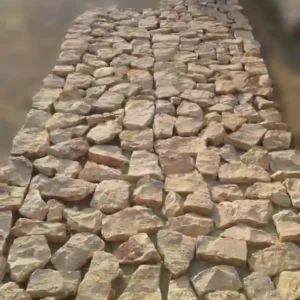
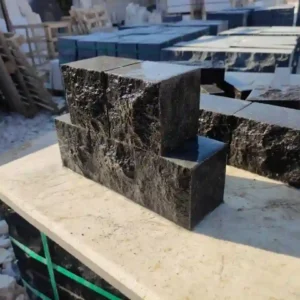
Finish changes the surface of Basalt Cobbles more than any other variable you control. A split or natural cleft face leaves an irregular, open texture with visible relief. Flaming opens the surface into a coarse, matte crystalline texture. Tumbling rounds the arrises and softens the face into a worn, matte appearance, while honing produces a flat, even, low-sheen surface.
On slipperiness, the current method is ANSI A326.3, measured wet — replacing the ASTM C1028 static test withdrawn in 2014 — and the finish you choose is the governing variable. No figures appear here; where a tested value exists for a given finish, the test report is available on request. Review wet samples on site against the specifier’s requirements.
Physical properties follow the same discipline. Rather than quoting numbers, specify the relevant ASTM test method and request the certificate from your supplier. Industry guidance on igneous paving stone is a useful starting point for which properties belong in a specification.
Drainage, Freeze-Thaw and Permeable Layouts
Water is the one agent that undoes good work quietly. Basalt Cobbles have a tight grain, so little water travels through the units themselves and everything you plan has to move water across the surface and out through the joints and base. In freeze-thaw regions that matters twice over — saturated bedding that freezes will heave a field no matter how good the stone is.
Permeable layouts suit basalt cobblestone pavers well, because wider joints filled with clean, open-graded chippings let water into a reservoir base instead of running it to a gully. That approach only works if the subgrade accepts water; over heavy clay you still need a positive outlet. The geological account of basalt’s formation explains why the rock itself contributes so little drainage capacity on its own.
- Set surface falls before laying and check them with a level, not by eye
- Use clean, angular, open-graded joint material where permeability is the goal
- Provide an outlet or infiltration test result before committing to a reservoir base
- Keep bedding and base materials compatible so fines cannot migrate between layers
Keeping a Cobble Field Tight Over Time
Maintenance on a field of Basalt Cobbles is mostly joint maintenance. Expect to refill and re-compact joint material where it settles after the first wet season, then far less often afterwards. That single habit is the difference between a field that stays locked for decades of service life and one that loosens at the edges within a few years.
Dark basalt is forgiving about staining, but it shows mineral haze and efflorescence from cementitious products more than a pale stone does. Keep mortar and slurry off the faces as you work, and wash down as you go rather than at the end of the day. Sealing is optional; if you want a wet-look enhancement, test it on a spare cobble first and follow the reseal interval the sealer manufacturer states.
Delivery, Site Access and Offloading
Delivery planning starts with weight, not volume. Basalt Cobbles arrive banded on pallets or in crates, and a modest-looking order can be a heavy load — offloading needs a forklift, a boom, or a machine already on site. Tell the team early about the approach: a tight turning circle, a low limb, a soft verge that will rut under a loaded truck, or a shared access road all change how the load is split and what equipment should meet it.
- Confirm whether the site can take a full-size delivery truck or needs staged part-loads
- Nominate a firm, level offload area clear of the excavation and of neighbors
- Have offload equipment and a banksman on site at the agreed time — a truck held up costs the whole program
- Open crates and check the material against the agreed specification before anyone signs
- Lead times are quoted with the order; delivery is arranged and managed through to the jobsite
At Citadel Stone, we quarry, template, manufacture and handle the material through to arranged delivery, and each order is checked against the agreed specification before it ships.
Get a Quote on Basalt Cobbles from Citadel Stone
Citadel Stone cuts Basalt Cobbles to order in cube and sett formats, with larger basalt stone block sizes available where a calmer surface and fewer joints suit the design. Finishes run from split and flamed through tumbled and honed, and thickness is specified to the loading of the application. Samples and written specifications can be requested before you commit, and test reports are provided on request where tested values exist.
Trade and wholesale enquiries are handled the same way as single-project orders: send drawings or a square-footage figure with your access details, and you will get a quote covering material, cut-to-order work and arranged delivery to the jobsite. Lead times are confirmed with the order. For custom sizes or phased deliveries, talk to the team before the base goes in so production and site sequence line up.
If your project extends beyond a cobbled apron, it is worth reviewing cobblestone paver formats and layout options as you settle the pattern and perimeter details. Contact us for pricing and availability, or send a drawing for a cut-to-order quotation. Citadel Stone delivers Basalt Cobbles for paths, courtyards and pool decks, a fine-grained volcanic stone in deep charcoal shades.
See also: stony basalt texture guide.
Related guides: basalt cobble drainage channel · Fixing Uneven Basalt Cobbles: Problem Solved · basalt cobbles design ideas · basalt cobble tree surround · basalt cobble pond edging · basalt raised garden beds.