


















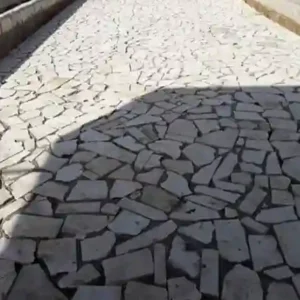

The single variable that separates a patio installation surviving a decade of severe weather from one that heaves, shifts, or spalls comes down to how you resolve the bedding layer against lateral load — not the stone thickness most buyers obsess over. Patio stones fail at the joint and edge long before the slab body ever cracks, which is why the base geometry and restraint detailing deserve more of your attention than the material spec sheet. You’ll get 25-plus years of service from a properly restrained flagstone terrace, or you’ll be relaying it in eight when the perimeter creeps. Getting there means understanding the mechanical behavior of stone under real-world stress, not just reading a hardness rating.
Patio Stones Material Properties That Actually Drive Performance
The properties worth scrutinizing are absorption rate, flexural strength, and coefficient of thermal expansion — in that order for most climates. Absorption tells you how the stone behaves in freeze-thaw regions, because water that enters the pore structure and freezes generates internal pressure that fractures the matrix over repeated cycles. Dense limestone and basalt sit at the low end of the absorption range, while softer sedimentary stone drinks more and demands better drainage.
Flexural strength matters because patio slabs span imperfect bedding. Even with meticulous base prep, you’re asking the stone to bridge minor voids and resist point loads from furniture legs and foot traffic. Flexural strength varies widely across the sedimentary stones common in patio work, so request the flexural test report for the batch you are buying and check it against your spans and loads.
- Absorption under 3% for freeze-thaw regions, ideally closer to 1% for exposed north-facing terraces
- Flexural strength above 1,000 PSI for standard 2-inch nominal thickness
- Surface finish rated for wet slip resistance if the patio adjoins a pool or downspout discharge
- Consistent thickness tolerance so bedding depth stays uniform across the field
At Citadel Stone, we inspect each inbound batch for thickness consistency and absorption variance before it enters warehouse stock, because a pallet with mixed calibration turns a clean install into a leveling nightmare. According to industry stone selection data, matching absorption characteristics to climate exposure is the strongest predictor of long-term paving durability. You can request absorption and strength documentation for any of our patio stones for sale before committing to a format.
Choosing Color, Format, and Finish for Outdoor Paving
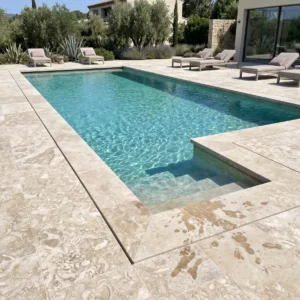
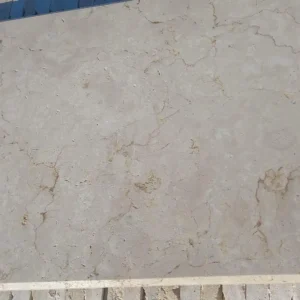
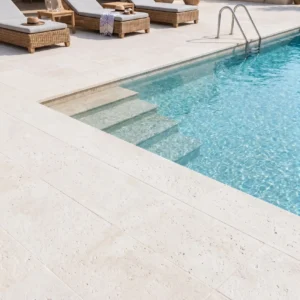
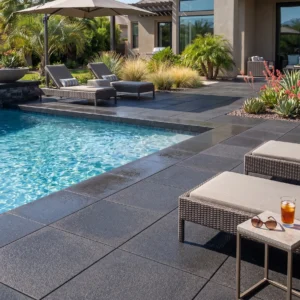
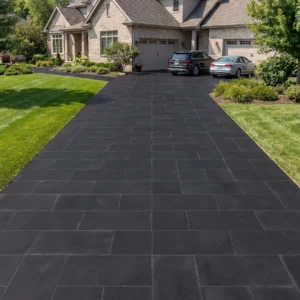
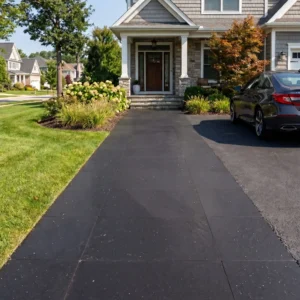
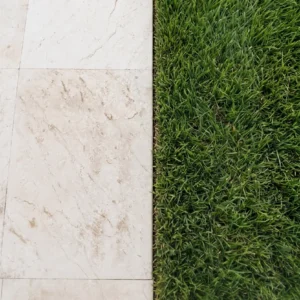
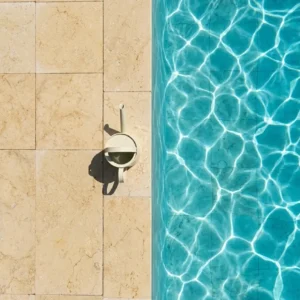
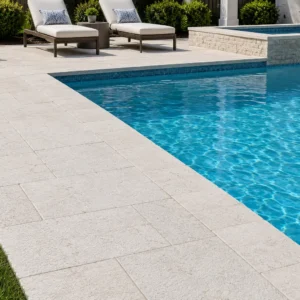
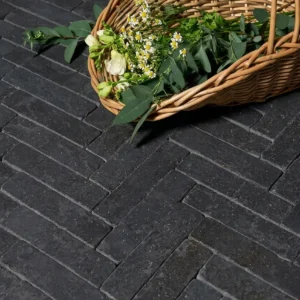
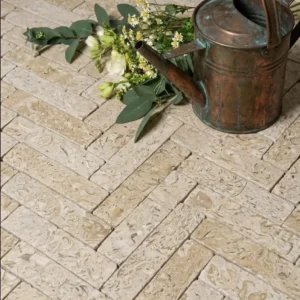
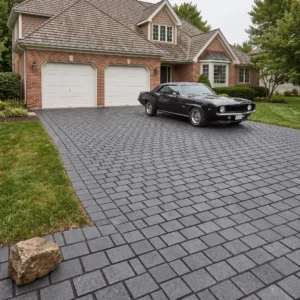
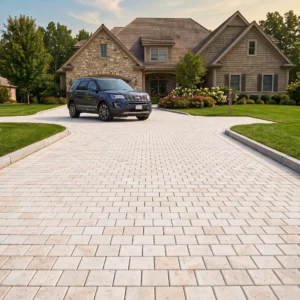
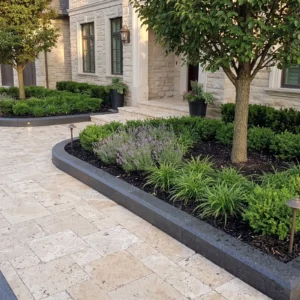
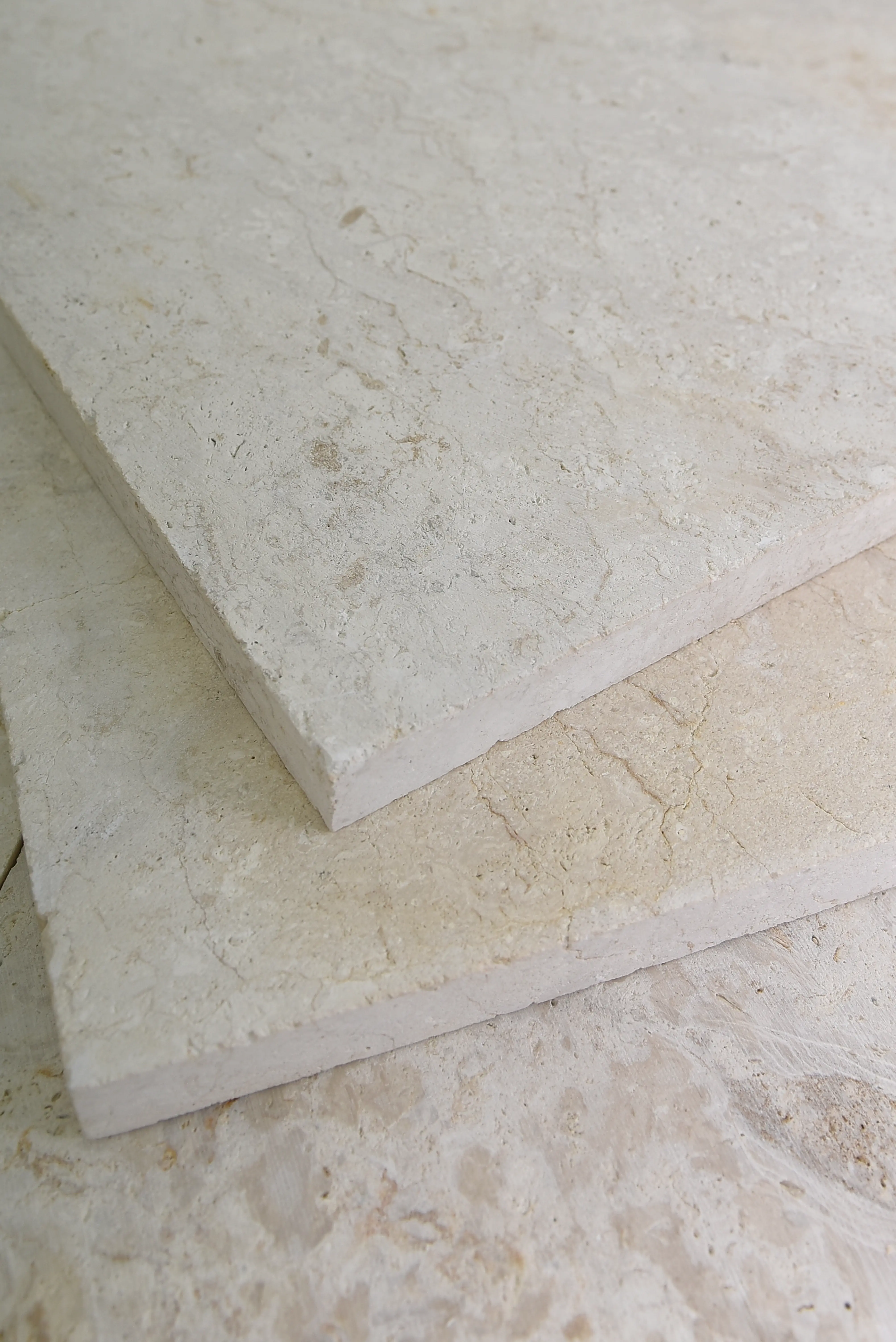
Your color decision has a performance dimension most buyers overlook — lighter shades in cream and ivory reflect solar radiation and stay cooler underfoot, while charcoal and graphite tones absorb heat and read as more formal against contemporary architecture. The natural stone paving slabs you select should also account for how the surface hides or reveals surface debris and efflorescence over time.
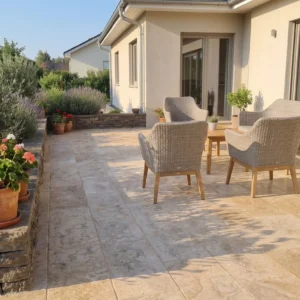
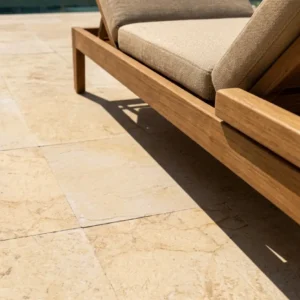
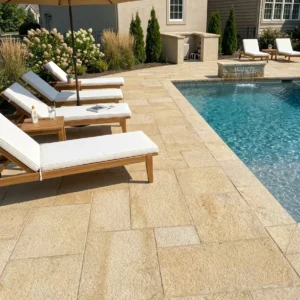
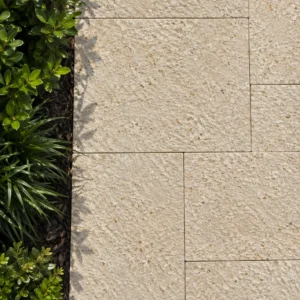
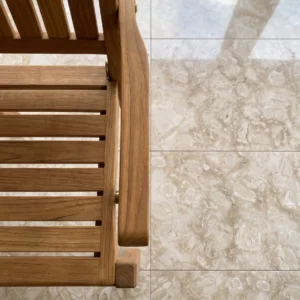
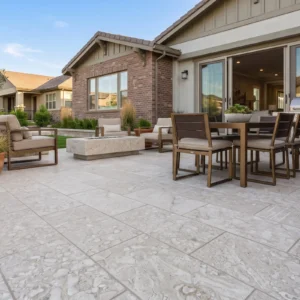
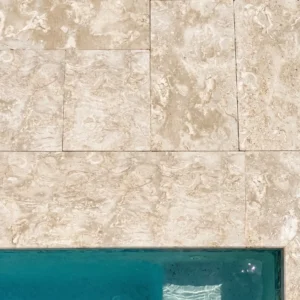
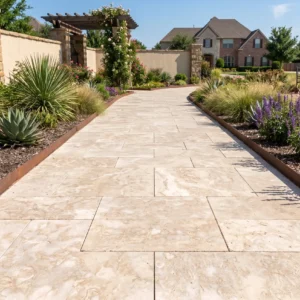
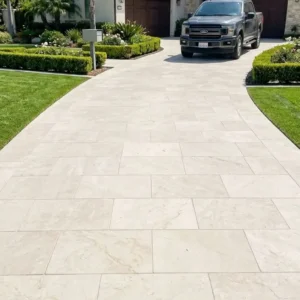
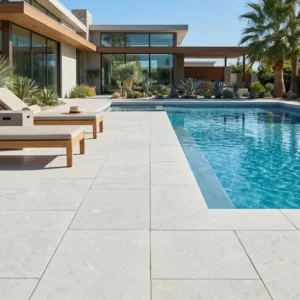
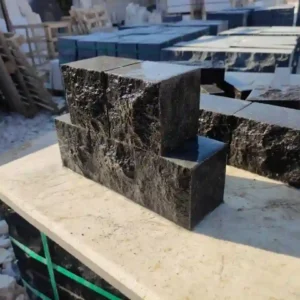
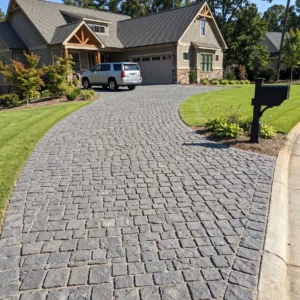
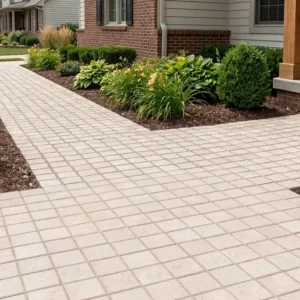
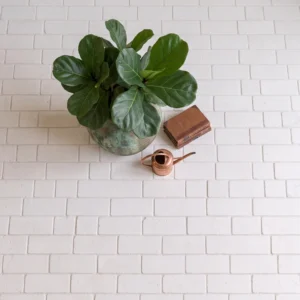
Format flexibility is where natural stone earns its premium over poured alternatives. You can specify large patio slabs for a clean, modern field with minimal jointing, or random-size flagstone for an organic, layered look. Citadel Stone stocks patio stones in standard formats including 12×12, 16×16, 24×24, and mixed-size flagstone patterns, with tumbled, honed, and brushed finishes available to match your project requirements.
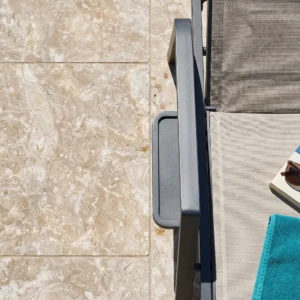
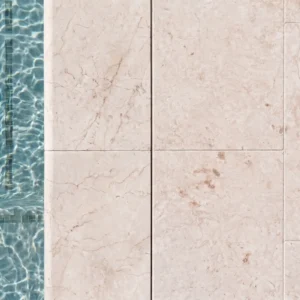
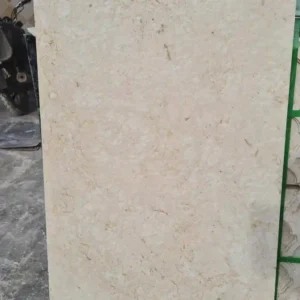
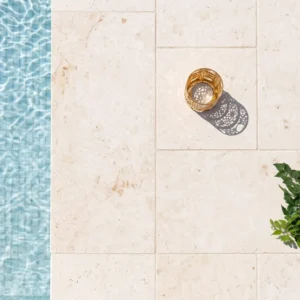
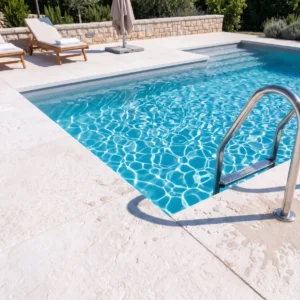
- Cream and ivory tones for barefoot comfort and traditional garden paving schemes
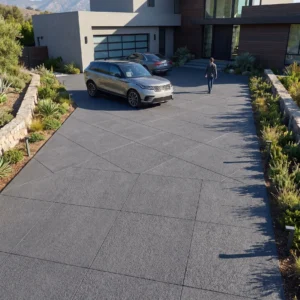
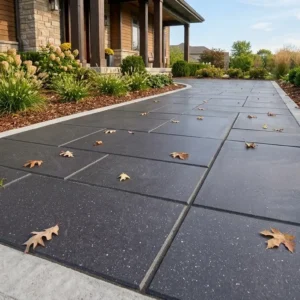
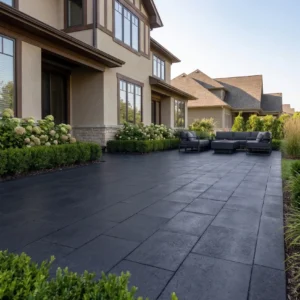
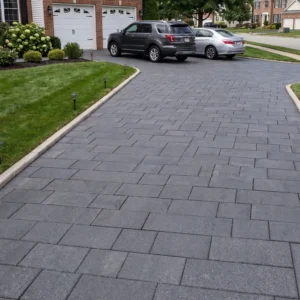
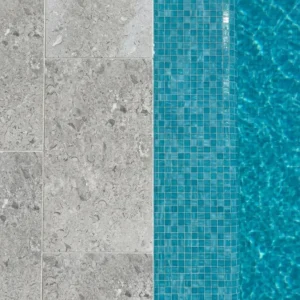
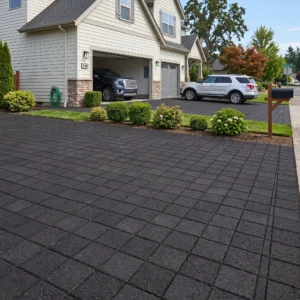
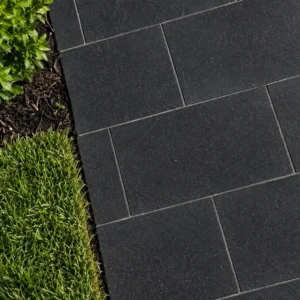
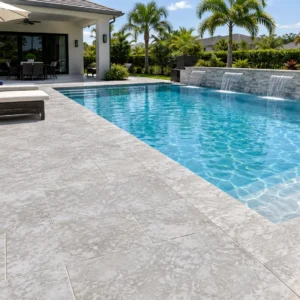
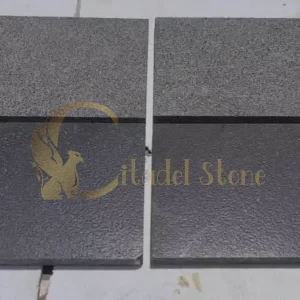
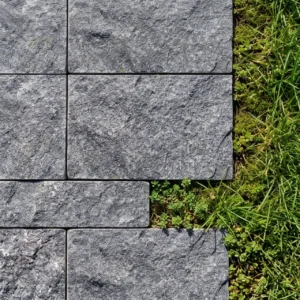
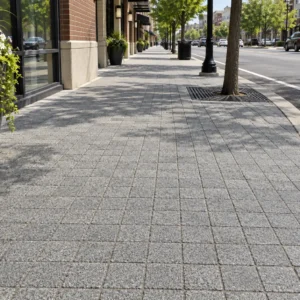
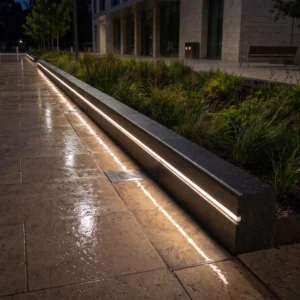
- Silver and dark grey for contemporary courtyard paving with crisp joint lines
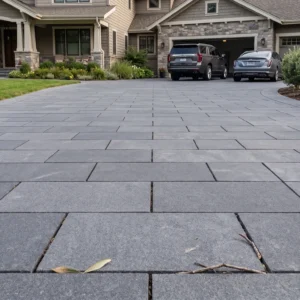
- Large-format slabs to minimize joints across open terraces
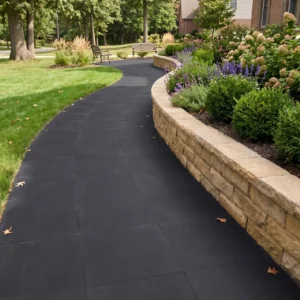
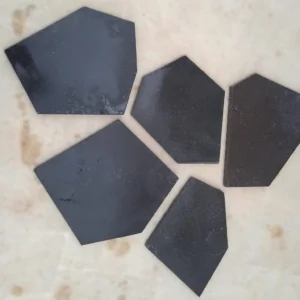
- Random flagstone for naturalistic walkway and stepping-stone layouts
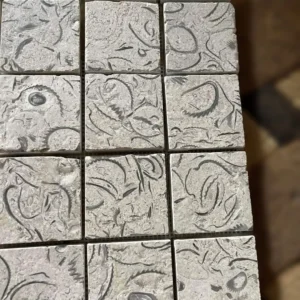
- Tumbled finishes where you want softened edges and inherent slip texture
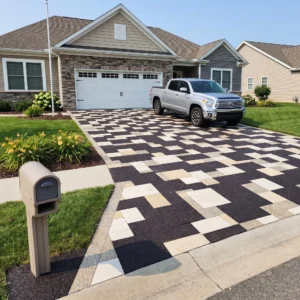
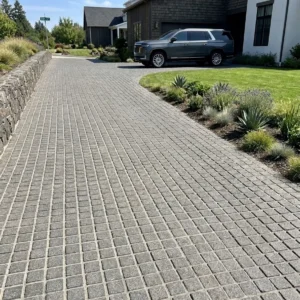
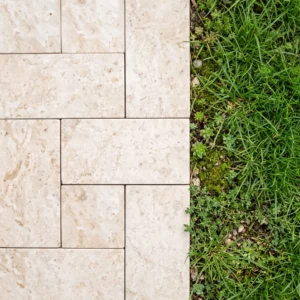
Here’s what most specifiers miss: the joint pattern influences drainage as much as aesthetics. Tight-jointed large slabs shed water fast but concentrate runoff at the perimeter, while wider-jointed flagstone with a permeable fill lets water percolate in place. Match the pattern to your site’s drainage capacity, not just the courtyard paving visual you’re chasing.
Base Preparation — Where Storm Resistance Is Won or Lost
The base is your entire defense against weather-driven movement, and this is where the storm-resistance angle becomes concrete. Severe weather doesn’t usually crack stone directly — it saturates and destabilizes the base, and a saturated, poorly compacted subgrade is what lets slabs rock, shift, and separate. Your aggregate base depth should account for local frost depth in freeze-thaw regions and for the drainage capacity you need during high-intensity rain events.
For most patio applications, you’re specifying a compacted open-graded aggregate base of 4–6 inches over a geotextile separation fabric, with a bedding layer of coarse sand or fine chip on top. The open-graded stone matters because it stores and drains water rather than holding it against the underside of the slab, which is exactly what protects the assembly when a storm dumps two inches in an hour.
- Compact the base in lifts no thicker than 3 inches for full density
- Slope the finished surface a minimum of 1/4 inch per foot away from structures
- Use geotextile fabric to prevent subgrade fines from pumping up into the base
- Verify compaction with a plate compactor across multiple passes, not a single run
When specifying natural stone paving slabs for wind- and storm-prone sites, the perimeter restraint is non-negotiable — an unrestrained edge is the first thing to fail when saturated soil expands and pushes laterally. Getting the subgrade and edge restraint right at this stage prevents the most common long-term failures, and if you’re weighing the full project scope, the cost of patio stones guide breaks down how base materials factor into the total budget. Skimping on the base to save on aggregate is the false economy that shortens installation life the most.
How Wind, Hail, and Storm Loads Affect Your Specification
Mechanical stress from weather events is a real design consideration, and it’s often underweighted in favor of temperature discussions. Wind uplift on a patio surface is minimal for bedded stone, but wind-driven debris and the lateral soil pressures that follow heavy rain are what genuinely test an installation. Heavier, thicker slabs resist displacement better, which is why exposed sites benefit from a 2-inch nominal thickness minimum rather than the thinner tiles suited to sheltered courtyards.
Hail rarely damages dense natural stone the way it pits softer manufactured surfaces, and that resilience is one of stone’s quiet advantages in severe-weather regions. Field performance data shows that dense sedimentary and igneous stones shrug off hail impacts that would spall or dimple concrete alternatives. The vulnerability isn’t the stone body — it’s the joint fill washing out under storm runoff and the edge restraint giving way.
- Specify thicker slabs on exposed, elevated, or wind-loaded sites
- Use polymeric or stabilized joint sand that resists washout during heavy rain
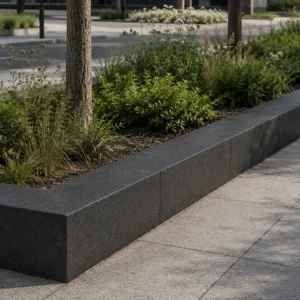
- Install a rigid or spiked edge restraint at every unbounded perimeter
- Grade aggressively so storm runoff moves off the surface before it can undermine the base
The detail that matters most for storm resilience is the interaction between joint fill and drainage. You want joints that hold their fill under sheeting water yet still let the assembly breathe. Polymeric sand handles this in tight-jointed layouts, while an open-graded stone chip works better in permeable flagstone fields where you’re relying on percolation rather than surface shedding.
Thickness, Load Ratings, and Traffic Considerations
Thickness selection is a load-and-span calculation, not a guess. Natural stone paving slabs in the 2-inch nominal range handle the point loads typical of foot traffic, furniture, and the occasional planter without cracking, provided the bedding is uniform. Thinner tiles in the 3/4- to 1-inch range belong on rigid mortared substrates, not sand-set patios, because they lack the flexural reserve to bridge minor base imperfections.
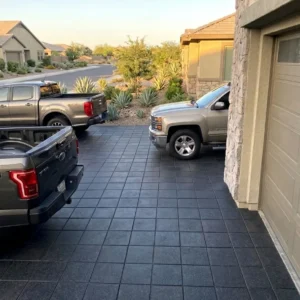
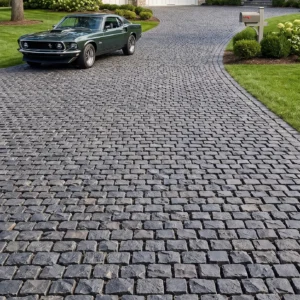
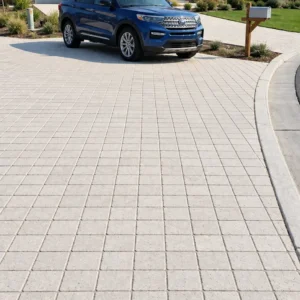
For patios that carry light vehicular load — a golf cart, a garden tractor, or occasional delivery access — step up to a full 2 3/8 inches or thicker and increase your base depth accordingly. The stone spans the same, but the base has to distribute a heavier point load without deflecting. Undersizing the base here is the classic mistake that produces rocking slabs within a season.
- 3/4–1 inch: mortared installations over concrete only
- 2 inch nominal: standard sand-set residential patios and walkways
- 2 3/8 inch and up: light vehicular and high-traffic commercial courtyard paving
- Increase base depth proportionally as slab thickness and expected load rise
Sealing protocols for natural stone paving slabs differ from standard concrete maintenance because you’re managing absorption, not surface abrasion. A breathable penetrating sealer on absorptive stone reduces staining and slows freeze-thaw water uptake without trapping vapor, which is critical in cold climates where trapped moisture drives spalling. Expect to reseal absorptive stone every two to three years and dense stone far less often.
Comparing Natural Patio Stones to Manufactured Options
The honest trade-off between natural patio stones and manufactured patio stone comes down to lifespan, appearance aging, and unit cost. Manufactured concrete pavers cost less upfront and offer perfect dimensional consistency, but they fade, and once the surface pigment wears, the gray substrate shows through. Natural stone weathers into a richer patina rather than degrading, which is why it holds design value across decades.
Manufactured units do offer genuine advantages worth acknowledging — tighter tolerances, predictable coloring for large uniform fields, and lower material cost per square foot. For strict-budget commercial projects, manufactured patio stone is a legitimate choice. But the moment a project values longevity and authentic material character, natural stone earns its premium. Buyers evaluating patio paving stones for sale often weigh this exact balance before committing.
- Natural stone: superior longevity, patina, and hail resistance; higher upfront cost
- Manufactured pavers: lower cost, uniform sizing; surface fade and shorter service life
- Natural stone slabs handle freeze-thaw better when absorption is matched to climate
- Both require sound base prep — neither survives a bad subgrade
Federal geological survey data on natural stone paving production, documented in usgs.gov/myb/vol1/2018/myb1-2018-dimension-stone.pdf”>USGS dimension stone use statistics, reflects the sustained demand for dimension stone in exterior applications precisely because of this durability profile. When you buy natural stone, you’re paying for a material that outlasts multiple cycles of the cheaper alternative.
Maintenance Practices That Extend Patio Life
Your maintenance routine is straightforward, but the timing matters more than the effort. Refreshing joint fill before it fully depletes is the single highest-value task, because open joints let water reach the base and start the destabilization cycle. Check your joints each spring after freeze-thaw season and top off any that have washed out or settled.
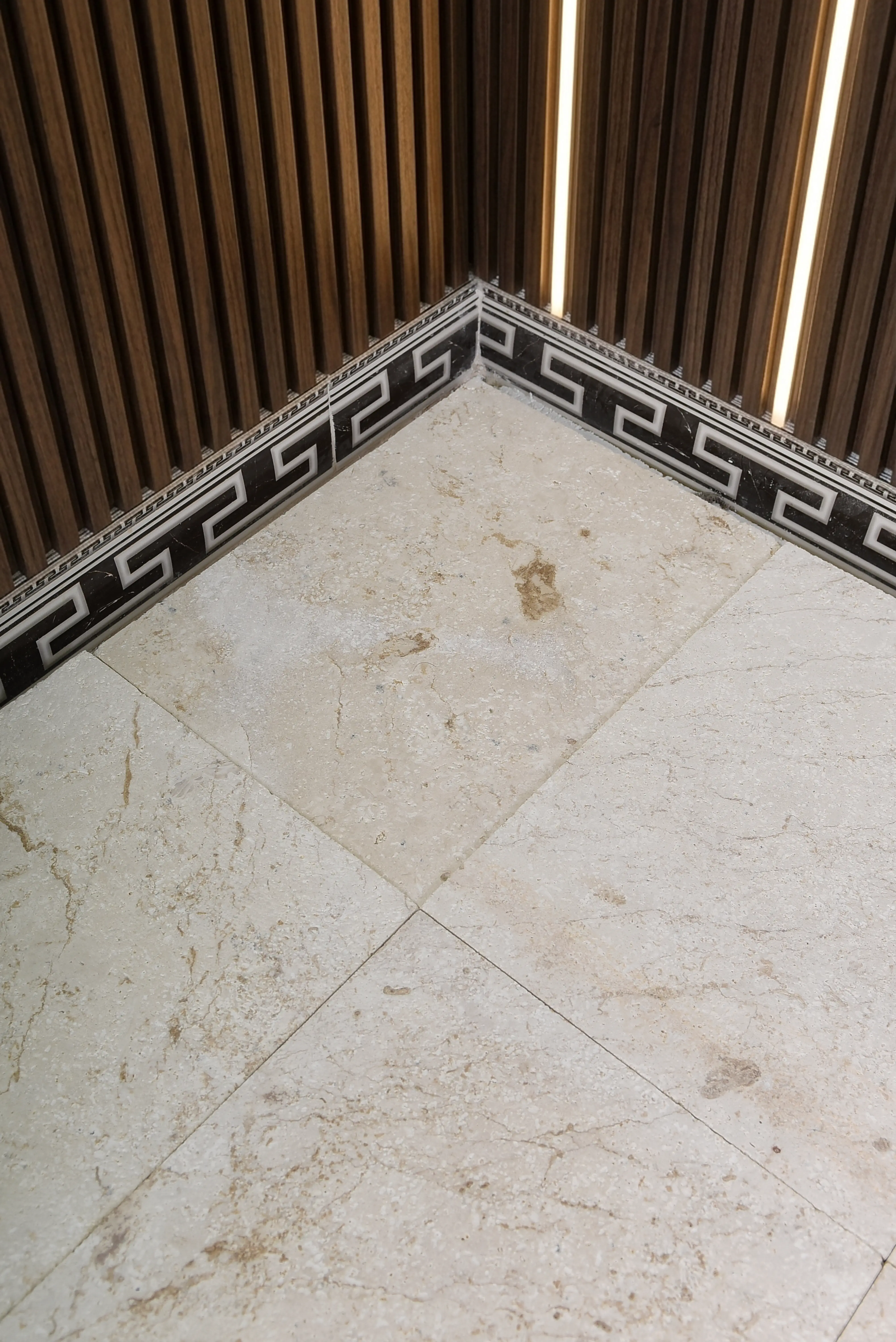
For projects requiring custom cuts or non-standard formats, Citadel Stone’s team can advise on lead times and matching replacement stone from the same quarry batch, which keeps color and texture consistent when you do need a repair. Keeping a small reserve of your original stone in dry storage is a smart hedge — batch-matched replacements years later are far harder to source.
- Sweep debris and rinse the surface seasonally to prevent organic staining
- Top off joint sand or chip fill annually, especially after severe weather
- Reseal absorptive stone every two to three years with a breathable penetrating sealer
- Address any rocking slab immediately before it disturbs neighboring units
What often gets overlooked is drainage maintenance. Downspouts, grading, and adjacent bed levels shift over time, and a patio that drained perfectly at install can start pooling after landscaping changes. Walk the perimeter after a heavy rain and confirm water still moves off and away — that habit alone prevents the slow base saturation that undermines longevity.
Sourcing Patio Stones — Wholesale, Bulk, and Delivery Logistics
Sourcing decisions shape your project timeline as much as your budget. Citadel Stone ships patio stones nationwide from regional inventory, and maintaining warehouse stock across the country typically reduces lead times to one to two weeks compared to the six-to-eight-week import cycle most projects face when material has to cross an ocean first. That difference matters when your install crew is scheduled and weather windows are tight. Trade accounts sourcing through experienced patio stone suppliers value that speed as much as the price.
For volume projects, bulk patio stones and full-pallet quantities lower your per-unit cost, and Citadel Stone offers patio stones wholesale to trade buyers and contractors working at scale. You can request sample tiles or thickness specifications before committing, which lets you verify color and finish against your design intent without ordering blind. Reliable patio slab suppliers and dependable patio block suppliers earn repeat trade business on exactly this kind of pre-order transparency.
- Bulk patio stones and full-pallet pricing for larger installations
- Patio stones wholesale terms available to trade and contractor accounts
- Nationwide patio stone delivery coordinated from regional warehouse inventory
- Sample requests and specification documentation available before you order
Truck access is the logistics detail buyers forget until delivery day. Palletized stone is heavy, and a standard flatbed with a forklift or crane needs clear, firm ground to stage the drop. Confirm your site can accept a full truck and that the staging point sits close to the work area — rehandling heavy pallets by hand across a soft lawn adds cost and risk. Sourced from our selected quarries in the Mediterranean and the Middle East, each batch that reaches our warehouse is inspected for consistency before it ships.
Order Patio Stones — Nationwide Delivery Available
Citadel Stone stocks patio stones in standard formats including 12×12, 16×16, 24×24, large slabs, and mixed-size flagstone, in cream, ivory, silver, and charcoal tones with tumbled, honed, and brushed finishes. You can buy patio stones for sale with samples or full specification sheets — absorption, flexural strength, and thickness tolerance — before placing an order, so your selection matches both your design and your climate exposure. Trade and wholesale enquiries are handled directly by our team, with volume pricing on bulk patio stones, patio slabs wholesale, and cheap per-unit rates on wholesale patio slabs for contractors and commercial projects. As one of the more responsive patio stone manufacturers shipping direct, we coordinate patio stone delivery nationwide, with lead times that typically run one to two weeks from regional inventory to your site’s access and staging needs. Working with organized patio paving stones for sale and patio slab suppliers keeps your schedule intact. To move forward, request a quote, ask for pricing on your target format, or schedule a consultation on custom cuts and non-standard sizes. Beyond patio work, your property may also benefit from complementary stone features — working with skilled granite fabricators covers another dimension of custom stone specification worth reviewing under the same Citadel Stone standard. Contractors and designers rely on Citadel Stone Patio Stones, sourced from quarries across the Mediterranean and Middle East, for commercial work.
See also: types of patio stones.
Related guides: How to Clean Patio Stones Without Causing Damage · patio stones sealer · patio ideas with stepping stones · patio stones for fire pit · slate patio stones guide · Patio Designs with Stones: Patterns and Layout Ideas.